Drizzle-Proof: A Field Guide to Watches That Endure the British Climate
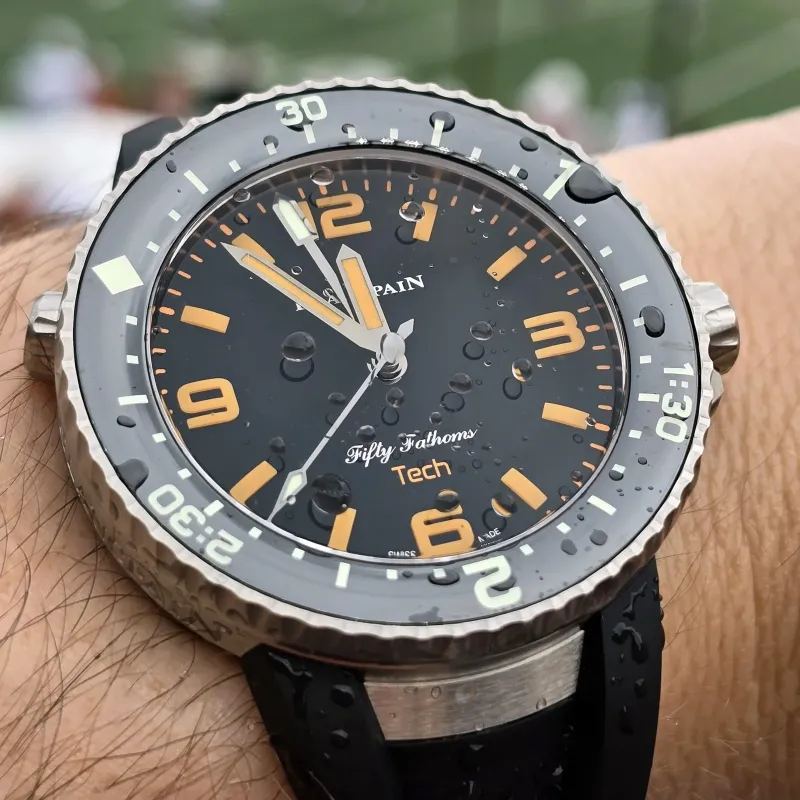
Photo: diver watch rain water droplets wrist weather, via www.hourstriker.com
It rains, on average, around 150 days a year in the United Kingdom. Add coastal salt air, central heating that parches gaskets, and some of the hardest tap water in Europe, and you have a climate that is quietly hostile to fine watchmaking. Yet the British collector rarely thinks about weather resistance until something goes wrong. Consider this the corrective.
What Water Resistance Ratings Actually Mean
The most common misunderstanding in watch ownership concerns the numbers. A watch marked 30 metres is not rated for swimming; it is rated to survive splashes. The figures derive from laboratory pressure tests conducted with a static watch — not the dynamic pressure of a swimmer's arm entering water.
A practical translation for British life:
- 30m (3 ATM): rain on the wrist, hand-washing. Nothing more.
- 50m (5 ATM): showering is debatable; paddling in Cornwall is a risk.
- 100m (10 ATM): swimming, snorkelling, a lifetime of Scottish drizzle without concern.
- 200m+ or ISO 6425 'Diver's': genuine water confidence, screw-down crown essential.
The Five That Survive
1. Rolex Submariner. The archetype for good reason. Screw-down crown, robust case, and gaskets engineered for decades. It will outlast the weather and quite possibly the wearer.
2. Seiko SKX-derived divers. The Japanese mastery of affordable water resistance is unmatched. A 200m rating at this price point makes it the sensible beater for damp commutes and coastal walks alike.
3. Omega Seamaster 300. Born of a brand with genuine naval heritage, its helium escape valve may be unnecessary in the North Sea, but the engineering underneath is not decorative.
4. G-Shock (Casio). Unglamorous, perhaps, but the resin-cased G-Shock has survived more British weather — and more British drops on British pavements — than any mechanical watch ever made.
5. Marathon General Purpose Mechanical. A military specification field watch built to mil-spec tolerances. It treats a Lake District downpour as a Tuesday.
The Five That Won't
1. Vintage dress watches with push-pull crowns. Beautiful, and fatally vulnerable. A 1960s piece with a non-screw-down crown is one heavy shower away from a rusted movement.
2. Leather-strapped chronographs in daily rotation. The watch may cope; the strap will not. British humidity turns untreated leather green and brittle within a season.
3. Fashion-brand quartz watches. The 'water resistant' stamp on a high-street piece often means 3 ATM at best, with gaskets that degrade in years, not decades.
4. Skeletonised dress pieces. Open dials are gorgeous and open cases are porous. Every gap is an invitation to condensation.
5. Anything with a worn crown gasket — regardless of rating. A 300m diver with perished seals is less water resistant than a 30m watch with fresh ones. Ratings describe the watch new; ownership happens afterwards.
The Hard Water Problem
Britain's chalk aquifers supply water rich in calcium — harmless to a sealed watch, but a slow menace to any exposed caseback or bracelet link. Limescale deposits in crevices hold moisture against the metal, accelerating corrosion, particularly on plated cases and standard steel bracelets in coastal towns. A monthly wipe-down with a soft, barely damp cloth, followed by thorough drying, prevents most of it.
Care Rituals for These Isles
Three habits will do more than any spec sheet. First, never operate the crown underwater — a moment's vanity during a swim can flood a movement. Second, have gaskets tested and replaced every two to three years; a watchmaker's pressure test costs little and buys certainty. Third, after salt exposure — sea swims, winter gritting, even heavy perspiration — rinse the bracelet in fresh water and dry it properly. Chlorine and salt are patient destroyers.
A Final Thought
The British climate does not forgive carelessness, but it rewards the prepared. Choose your water resistance honestly, service the seals religiously, and the weather becomes merely a backdrop — not a threat. After all, a watch built to measure time should not be defeated by it.