Local Time, Home Time: What a Watch Owes You When You Leave Britain
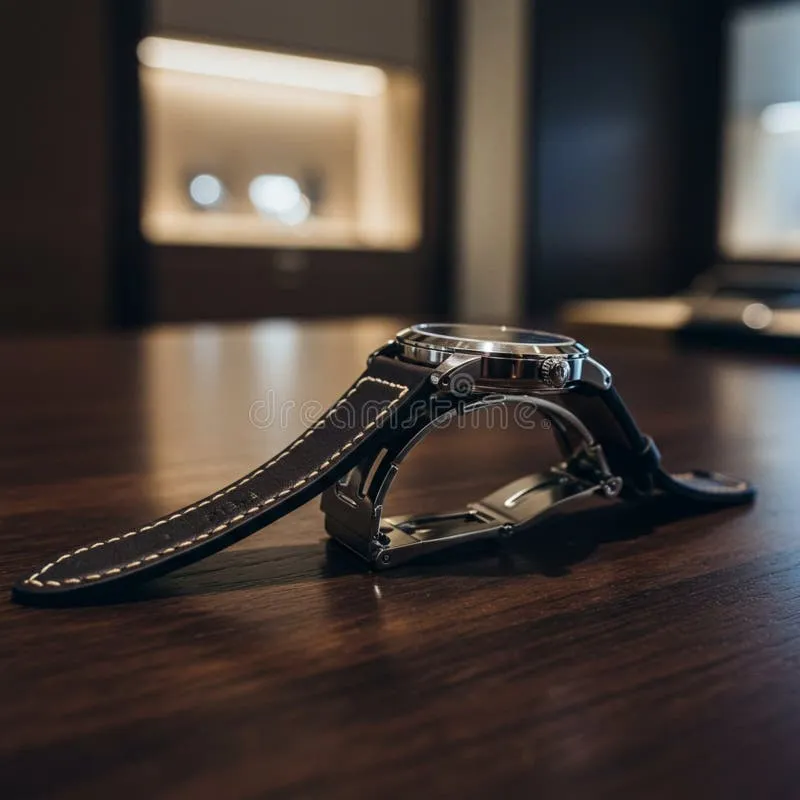
Photo: luxury GMT wristwatch on airport departure lounge table, via thumbs.dreamstime.com
There is a particular moment familiar to any British traveller: you have landed, the baggage carousel is sulking, and your phone confidently informs you it is 03:47 while your body insists it is teatime. It is in this bleary limbo that the traveller's watch earns its keep — or fails to.
The market offers three broad answers to the problem of being in two places at once, and they are not interchangeable. Choosing between them is less about specification sheets and more about an honest assessment of how you actually travel.
The GMT: A Complication Built for the Long Haul
The GMT hand remains the default answer, and for good reason. A fourth hand, set to home time on a 24-hour scale, means that wherever you find yourself — a Hong Kong hotel room, a rented cottage in the Dordogne — a glance tells you whether it is a reasonable hour to ring your mother.
The so-called 'flyer' or 'caller' distinction matters more than the marketing suggests. In a true flyer GMT, the local hour hand jumps independently, letting you set local time without disturbing home time or stopping the movement. For anyone crossing time zones more than once a year, this is worth paying for. Caller GMTs, which move the main hour hand, are cheaper but clumsier in practice.
Then there is the bezel. The rotating 24-hour bezel allows tracking of a third time zone, which sounds splendid until you admit how often you use it. Our opinionated view: the bezel is the least important part of a GMT, and anyone claiming otherwise is probably selling one.
The Dual-Time Dress Watch: Quiet Competence
Not every journey involves a departure board. For the traveller whose trips are a handful of long weekends — a wedding in Florence, meetings in Zurich — a slim dual-time watch with two central hands or a discreet sub-dial may serve better than anything with a bezel.
These pieces trade the GMT's mechanical theatre for legibility and restraint. A dress watch that shows home time in a small aperture will never wow the enthusiast forum, but it will look entirely correct with black tie in a way a stainless-steel pilot's GMT, however handsome, does not.
The Worldtimer: Poetry for the Frequent Flyer
The worldtimer is the complication as cartography: every time zone on the dial at once, usually via a ring of city names. It is arguably the least practical of the three and the most charming. If your travel is constant and varied — a genuine handful of UK buyers — nothing else communicates the condition so elegantly.
A Shortlist Across the Tiers
Under £1,500: Seiko's 5 Sports GMT offers a genuine GMT movement (albeit a caller) with cheerful, unpretentious styling — ideal for the traveller who wants the function without the ceremony.
£2,000–£6,000: Tissot's PRX Powermatic 80 GMT brings the flyer complication to a wearable, integrated-bracelet case. Longines' Spirit Zulu Time, slightly above this band, is arguably the most complete traveller's watch at any price: a true flyer GMT with vintage aviation provenance.
£6,000 and beyond: Grand Seiko's GMTs, with their high-beat movements and dials that seem to change with the light, reward the buyer who wants the complication executed to an exacting standard. And yes, the Rolex GMT-Master II remains the reference — if you can find one at retail, which most cannot.
So Does the Traveller's Watch Need a Bezel?
No. The rotating bezel is a solution in search of a problem for the overwhelming majority of buyers. What a good travel watch actually needs is three things: a movement that can be set quickly and confidently at the kerbside, enough water resistance to survive a hotel pool, and a dial you can read at 04:00 without your reading glasses.
Buy for the journey you take, not the one the marketing department imagines. Time, after all, waits for no one — but it need not confuse you either.