North of the Premium: Mapping Britain's Regional Second-Hand Watch Market
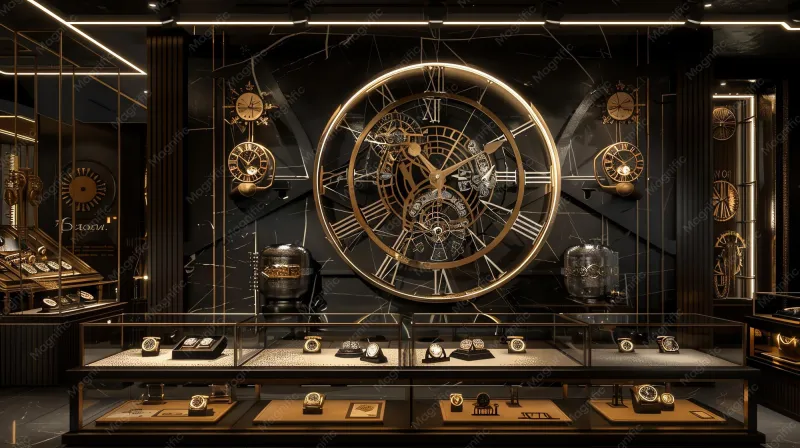
Photo: luxury watch shop interior dealer showcase vintage timepieces, via img.freepik.com
There is a persistent belief, held with near-religious conviction in certain postcodes, that fine watches are bought in London and merely worn elsewhere. The auction houses of St James's, the flagship boutiques of Bond Street and Mayfair, the dealer showrooms clustered around Piccadilly — together they form a gravitational centre that collectors outside the M25 are expected to orbit, or at least visit twice a year with a chequebook.
The reality, as anyone who has transacted outside Zone 1 will attest, is considerably more interesting. Britain's regional second-hand market is not a satellite of the capital; in several respects, it is a superior proposition.
The Jewellery Quarter's Quiet Authority
Birmingham's Jewellery Quarter has been making and valuing precious things for the better part of two centuries. What visitors often miss is how much of that expertise now concentrates on wristwatches. The area supports a dense ecosystem of independent dealers, watchmakers and valuers within a few hundred metres of each other — a concentration of horological trade that has no true equivalent in the capital, where specialists tend to be scattered across expensive retail frontage.
The practical consequence is competition. When four reputable dealers operate within walking distance, pricing discipline follows. A buyer who walks the Quarter on a Saturday morning will typically encounter a wider spread of asking prices for the same reference than they would across an afternoon on a single London street — and that spread is opportunity.
What the Provinces Do Better
Three structural advantages recur across the regional market, and they are worth stating plainly.
Overheads, and therefore margins. Rent is the invisible hand in every second-hand price. A dealer in Leeds city centre or Glasgow's Finnieston pays a fraction of the occupancy costs borne by a West End counterpart, and that difference does not all accrue to the dealer. It is visible in the gap between what regional sellers ask and what London showrooms charge for comparable stock.
Local supply, less arbitraged. The provinces hold estates, pension-cabinet collections and inherited pieces that have never been offered to the national market. A Cardiff dealer with forty years of standing will be the first call when a Valleys family needs to sell a grandfather's chronometer — long before an auction house issues a catalogue. Regional buyers are, in effect, standing closer to the source.
Service without the premium. Independent watchmakers of genuine competence operate in Sheffield, Newcastle, Bristol and Edinburgh. A full service from a respected regional horologist routinely costs twenty to forty per cent less than a London atelier's equivalent, with shorter lead times and a name attached to the work rather than a brand's service centre queue.
The Counter-Case, Honestly Stated
A buying guide that ignored the capital's genuine advantages would be guilty of the same lazy thinking it seeks to correct.
London remains the deepest market for rare references and complicated pieces. If the object of your search is a scarce vintage chronograph or a modern complication with a waiting list measured in years, the capital's inventory density is unmatched. Auction houses headquartered in London also attract international consignments, and for certain lots the competitive tension of the saleroom works in the seller's — not the buyer's — favour.
There is also a liquidity argument. Selling in London may achieve a marginally better result for the most liquid references precisely because the buyer pool is largest there. The provincial discount, in other words, cuts both ways depending on which side of the transaction you occupy.
A Practical Itinerary
For the collector prepared to look beyond the capital, a workable strategy looks like this.
- Buy regionally, verify carefully. Prioritise dealers with documented histories, boxed-and-papered stock and transparent return terms. The Jewellery Quarter, Leeds' Victoria quarter and Glasgow's west end each reward a day's visit.
- Sell where the piece is local. A regional dealer who knows the estate a watch came from will price with confidence; a London buyer prices for the unknown.
- Service locally, warranty in writing. Establish a relationship with a regional watchmaker before you need one urgently. Ask to see previous work and confirm what guarantee accompanies it.
- Use London last. Treat the capital as the venue of choice for the genuinely rare — not as the default setting for every transaction.
The Verdict on the Myth
The London premium is not a myth in absolute terms; rare things cost more where rich buyers congregate. But for the vast middle ground of the second-hand market — the well-maintained sports watch, the dress piece, the honest vintage chronometer — the capital's premium is a habit rather than a fact, and habits can be tested.
Chronolux's position is simple: the discerning collector should buy the market, not the postcode. Britain's regional dealers have spent decades earning their reputations quietly, in cities where overheads are sane and supply is close to hand. A train fare to Birmingham, Leeds or Glasgow is, on current evidence, one of the better-value investments in horology today.