Silent Introductions: What Your Wrist Says in the Room Before You Speak

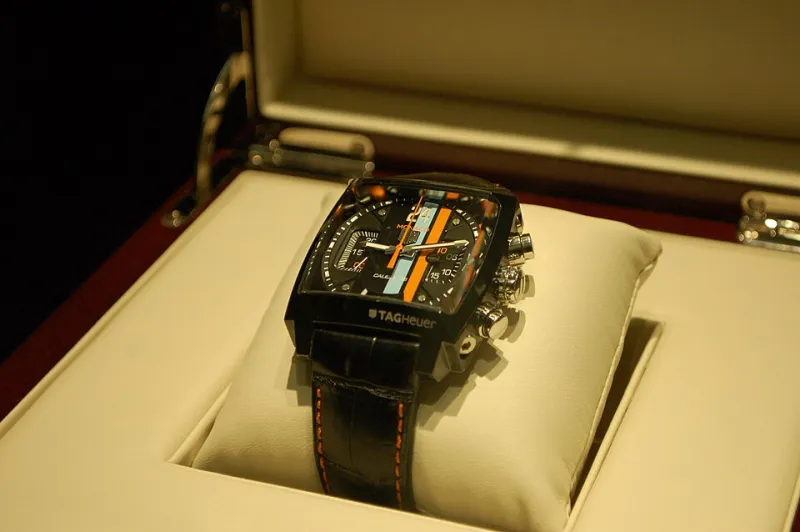
Photo: Volkan, CC BY-SA 4.0, via Wikimedia Commons
The Last Quiet Conversation
Britain has never been comfortable with displays of wealth. We do not, as a rule, announce our salaries at dinner parties, nor do we admire one another's houses with anything approaching candour. And yet we remain a nation of signalers — subtle, coded, deniable. The wristwatch is the last great instrument of that code: a piece of silent status signalling that operates, crucially, only among those who know how to read it.
A watch does not shout. It murmurs. And like all murmurs, its meaning depends entirely on where you happen to be standing when you hear it.
Reading the Room, Literally
Consider the school gate at half past eight on a Tuesday morning in Chiswick or Didsbury. The same timepiece can carry entirely different weight depending on the wrist. A Chanel J12 — ceramic, black, unmistakably design-led rather than horological — tells a story of cultural capital rather than inherited money. It says the wearer reads the right publications and shops on Mount Street, not Bond Street. It is a watch chosen by someone who knows precisely which conversations it will start, and with whom.
Contrast that with the boardroom. Here, a G-Shock on the wrist of a chief executive is not an affectation but a thesis. It suggests a man or woman who measures output, not ornament; who has nothing to prove because the proof is on the last quarterly call. In certain rooms — particularly those with engineers in them — a beater watch is the most confident statement available. It whispers: I am not here to be appraised.
And then, of course, there is the Submariner. Once a tool watch, now the default uniform of a certain kind of British success — property, private equity, the school run performed in a Defender. It is a perfectly good watch, worn by perfectly pleasant people. But its ubiquity has changed its grammar. Where it once signalled connoisseurship, it now signals arrival, and arrival is a word the truly established tend to avoid.
The Class Mechanics of the Dial
There is a peculiar inversion at work in British horology. At the lower end of the visible spectrum, a flashy watch risks reading as effortful. At the very top, ostentation reads as insecurity. The sweet spot — the true signifier of confidence — is restraint with a knowing detail: a vintage piece with a story, an independent brand nobody at the table recognises, a watch bought not despite its obscurity but because of it.
This is why a thirty-year-old Omega with a tired dial can outperform a brand-new precious metal piece in the rooms that matter. The former suggests continuity, taste, perhaps a father with good judgement. The latter suggests a recent bonus and a sales assistant's encouragement.
None of this is fair, of course. But signalling never is.
The Deniability Problem
What makes the wristwatch uniquely British among status markers is its plausible deniability. A car is a statement; a watch can be a habit. You inherited it. It was your grandfather's. You simply needed something to tell the time on holiday. Every one of these defences is available, and every one is a fiction both parties agree to maintain.
The best watches in this sense are the ones that appear chosen rather than purchased — the J12 that suggests a long relationship with design, the G-Shock that suggests a long relationship with practicality, the old Seamaster that suggests a long relationship, full stop.
What We Would Suggest
If there is a lesson in all of this, it is that the watch worth wearing is the one whose story you can tell without embarrassment — and, better still, choose not to. Buy for the rooms you actually inhabit, not the ones you aspirationally attend. Let the seconds hand do the introducing.
In Britain, the most eloquent watch is rarely the loudest one. It is the one that says nothing at all, perfectly.